Usable interior
Compare the interior height, width, and depth with your largest folder, device, case, or box. Exterior dimensions do not tell you what fits inside.
By Which Safe · Research-based guidance · Updated
SIZE PLANNING
Use interior capacity for the items you actually own, then add room for the future. The estimator gives a rough starting range. Use the item-fit check below to compare your largest object with the three researched interiors.
QUICK SIZE CALCULATOR
Select the closest match. This rule-of-thumb estimator uses the categories you choose; it does not measure your contents or calculate their volume. Growth is represented only by your last answer. Measure every item and confirm the usable interior before buying.
CHECK YOUR LARGEST ITEM
Enter the outside measurements of one complete item, including its case, in the orientation you plan to use. This compares the published rectangular interiors; door openings, trays, shelves, and operating clearance may reduce usable space.
Fit means strictly smaller than each stated dimension in the entered orientation. Rotating width and depth is also checked. This is a preliminary screen, not a guarantee of fit or protection. Source: the model dimensions in our manufacturer-sourced comparison.
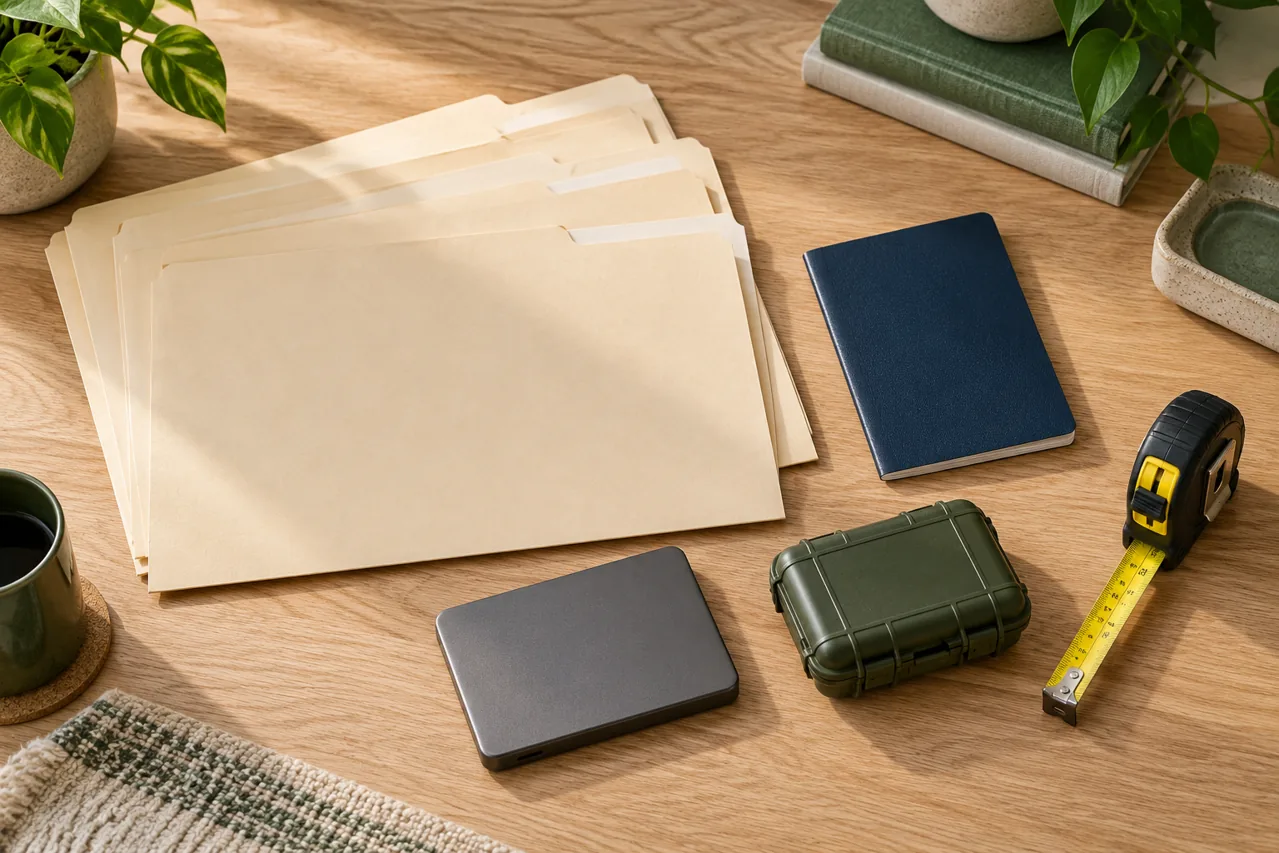
Compare the interior height, width, and depth with your largest folder, device, case, or box. Exterior dimensions do not tell you what fits inside.
Allow for the open door, not only the safe body. A tight cupboard or wardrobe can make a well-sized safe frustrating to use.
Measure halls, stairs, doorways, turns, and lifts. Larger safes can be heavy enough that the route matters as much as the final location.
Leave operating space, consider floor protection and privacy, and review anchoring options before committing to a model.
After you know the approximate size, choose the protection type. Fire protection, burglary protection, lock type, and anchoring should be evaluated separately.